
For several decades, Iran has relied on non-state armed groups to extend its influence in the Middle East, particularly in states weakened by political and security crises. In Lebanon, this strategy has resulted in the emergence of Hezbollah as a central actor in the security and political equation. However, this regional anchoring is now taking place in a new context: Iran is facing deep economic difficulties, persistent social tensions, and increased international pressure. These constraints call into question Tehran’s ability to maintain the same level of external engagement. Consequently, a question arises: what is the future for Hezbollah if Iranian support were to be reduced or redirected?
Hezbollah and Iran: A Structural but Asymmetrical Relationship
A Long-term Ideological and Strategic Alliance
The relationship between Iran and Hezbollah was built in the 1980s, in a Lebanon marked by civil war, the Israeli occupation of the South, and the long-term weakening of the State. In this context, Iran supported the emergence of an armed actor capable of fitting into the Lebanese landscape while remaining aligned with its regional vision. This alliance notably relied on the principle of wilayat al-faqih, which recognizes the authority of the Iranian Supreme Leader, integrated by Hezbollah as an ideological frame of reference.
Over the decades, this relationship has consolidated around converging interests. For Iran, Hezbollah constitutes a strategic lever against Israel, while for the Lebanese armed group, this support has made it possible to strengthen its military capacity and its political weight on the national scene. This dynamic has profoundly influenced the balance of forces in Lebanon, where Hezbollah has gradually established itself as an essential actor—simultaneously military, social, and political.
However, this alliance remains asymmetrical. While Hezbollah has a degree of autonomy in its daily management, its major strategic orientations remain closely linked to Tehran’s choices. This structural dependence is today a key factor in understanding the questions surrounding the group’s future.
Multidimensional Iranian Support, a Pillar of Hezbollah’s Rise to Power
Iranian support for Hezbollah has been structured around several dimensions. On the financial level, Iran is the group’s main funder, providing most of its resources for its military and social activities. These flows have allowed Hezbollah to develop a network of social services and parallel institutions, strengthening its territorial anchoring.
On the military level, Tehran’s support has been central: training, equipment, and the transfer of military technologies have allowed Hezbollah to evolve from a guerrilla force into an actor with sophisticated capabilities. This rise to power occurred in a context of weakness of the Lebanese State, where the existence of a non-state armed actor became a structural element of the national landscape.
Beyond the material aspect, the support has a political and diplomatic dimension. Tehran presents Hezbollah as a legitimate actor of the regional “resistance.” This coverage reinforces the group’s position on the Lebanese scene but creates a dependence that conditions its ability to adapt to changes in the Iranian positioning.
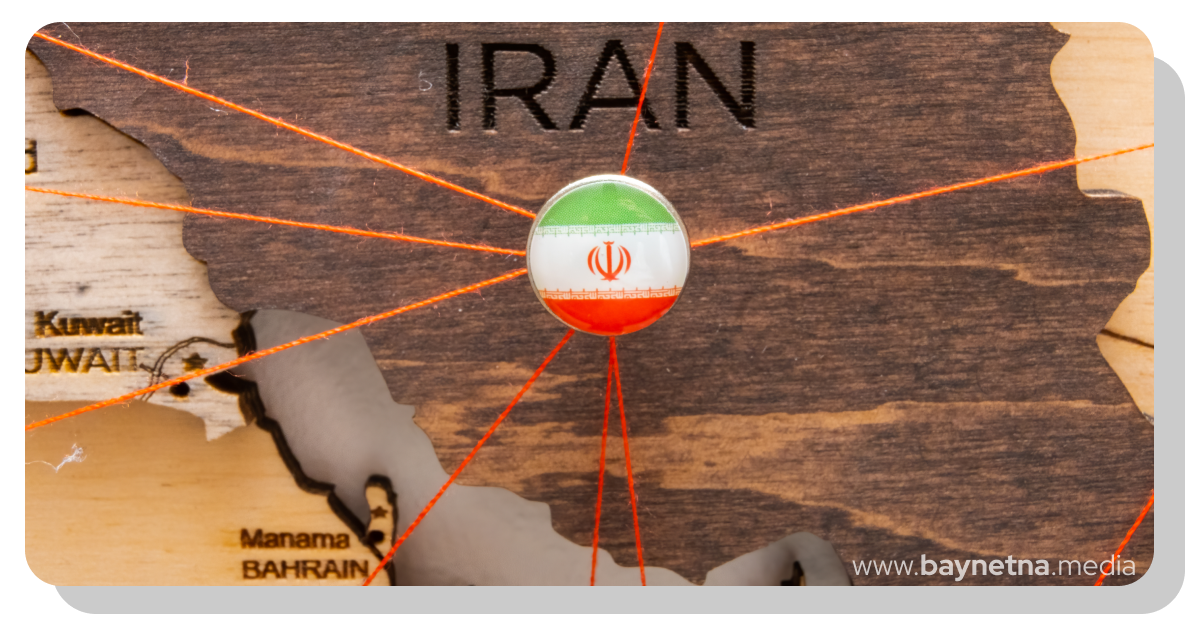
Hezbollah Within the Network of Armed Actors Allied with Iran
Hezbollah is part of the “Axis of Resistance,” alongside the Houthis in Yemen or Hamas in Gaza. However, the Lebanese case presents specificities: Hezbollah has developed a deep insertion into the political and social structures of Lebanon.
This integration gives it superior resilience, but exposes it more to the country’s internal dynamics, notably the economic crisis and expectations regarding state sovereignty. Unlike other allies of Iran, Hezbollah must coexist with a recognized Lebanese State, which makes its future inseparable from national balances. Any evolution in Iranian support would interact directly with efforts to strengthen the Lebanese State.
A Future Under Constraints: What Would Happen if Iran Retreated?
Iran Confronted with Its Own Internal Emergencies
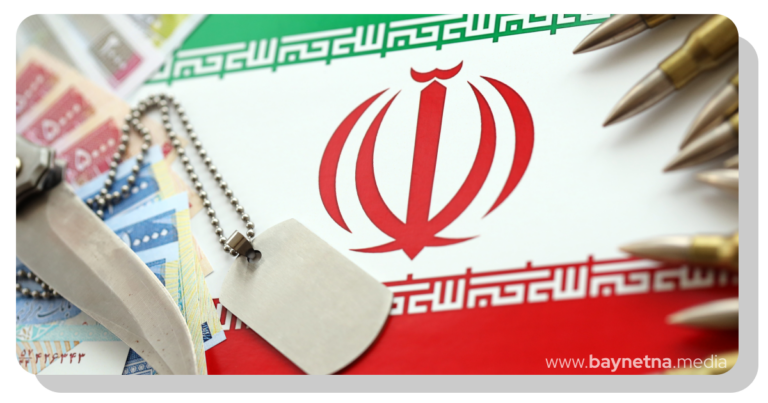
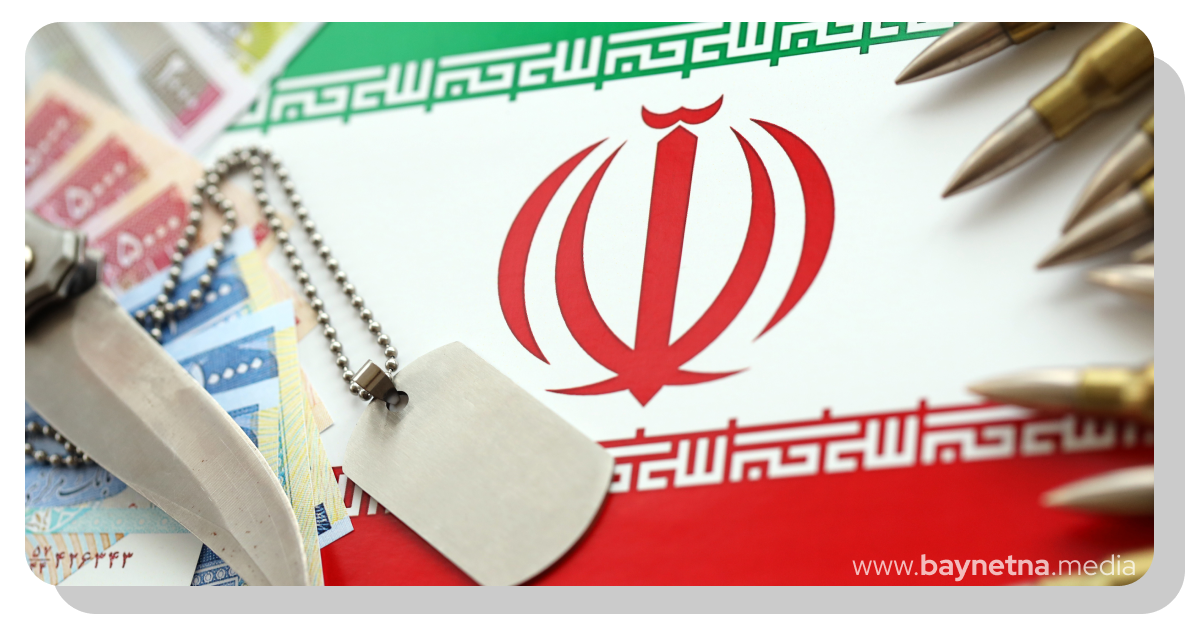
Iran is going through a phase of tensions marked by international sanctions, the depreciation of its currency, and persistent inflation. These difficulties have revived internal protests, forcing the regime to prioritize its domestic stability.
The cost of Iranian regional projection is a matter of debate in Tehran. The financing of armed allies increasingly appears to be a heavy burden in the face of economic emergencies. This fuels the hypothesis of a strategic readjustment, where Iranian support could become more targeted and potentially less generous, thus modifying the balances in Lebanon.
Hezbollah’s Vulnerabilities in the Event of Reduced Support
A decrease in Iranian support would expose Hezbollah to financial and logistical fragilities. Despite its own resources, Tehran’s support remains the bedrock of its capabilities. In a Lebanon in a deep economic crisis, the group would struggle to maintain its social and military networks without this external infusion.
These vulnerabilities are accentuated as pressures for the monopoly of weapons by the State intensify. The increased deployment of the Lebanese Armed Forces (LAF) is gradually modifying the security equation, placing Hezbollah in an increasingly constraining internal environment.
Possible Adaptation Scenarios
Hezbollah could adopt several strategies in the face of an Iranian withdrawal. A first scenario would be a refocusing on the domestic scene, prioritizing its political and social role to preserve its local influence while reducing its costly regional engagements.
Another scenario would involve a search for alternative funding and a pragmatic maintenance of a reduced military capacity. However, the fatigue of the Lebanese population in the face of confrontational logics and the desire for state reconstruction would limit its room for maneuver. The future of the group would then depend on its ability to integrate into a Lebanon in search of stability.
Lessons from Other Iranian Allies
The trajectories of the Houthis or Hamas show that resilience depends on national insertion. While Hezbollah possesses real social depth, it operates within a Lebanese State under reconstruction. This specificity serves as a reminder that its future is linked to Lebanese dynamics as much as, if not more than, to Iran’s strategy.
Conclusion
Hezbollah remains an actor linked to Iran, but this relationship is being tested by the crises Tehran is going through. For Lebanon, these uncertainties highlight a structural dependence that calls into question the sustainability of the current model.
The future of the country and that of Hezbollah will be decided by the ability of national actors to strengthen state institutions and restore sovereignty. The major challenge remains to rebuild a Lebanese State capable of mastering its own political and security choices in an unstable Middle East.
Sources :
- https://www.annahar.com/news/details?pageid=270389&lang=0
- https://www.timesofisrael.com/hezbollah-wont-give-up-its-weapons-without-a-decision-from-iran-lebanese-fm/
- https://nowlebanon.com/freedom-is-not-chaos-why-a-free-iran-would-liberate-not-destabilize-the-middle-east/
- https://www.iranintl.com/en/202512229294
- https://www.washingtoninstitute.org/policy-analysis/hezbollah-finances-funding-party-god
- https://www.washingtoninstitute.org/policy-analysis/hezbollah-nervously-watches-iran-washington-should-double-down-disarmament
- https://www.brookings.edu/articles/is-iran-on-the-brink-of-change/