
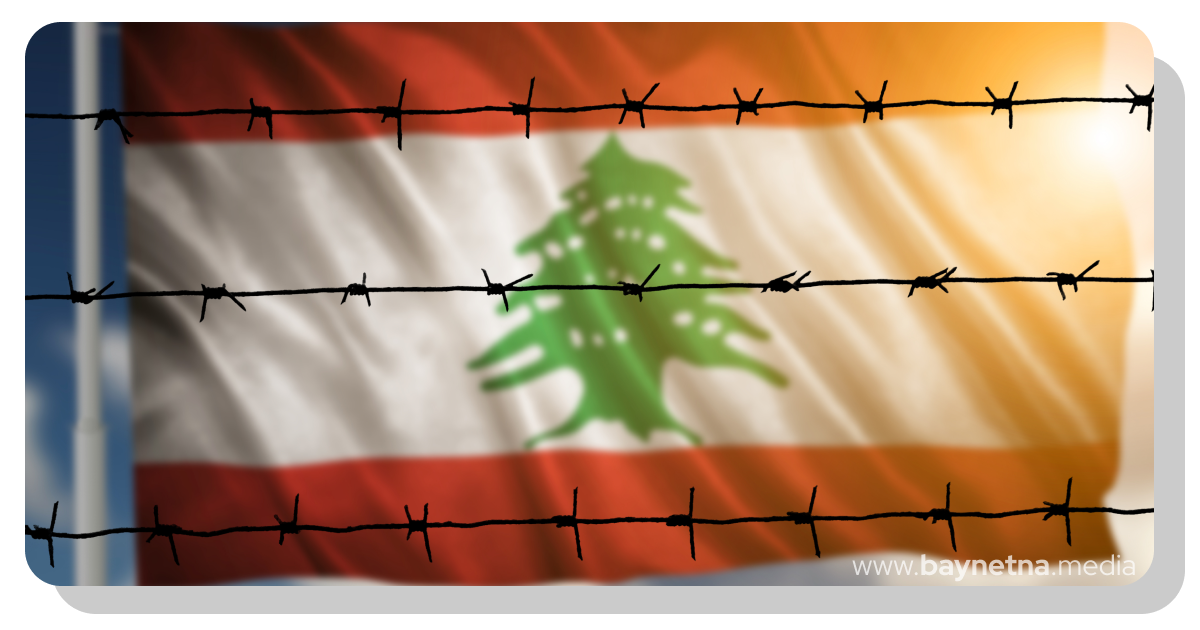
In early January, the Lebanese army announced the completion of the first phase of the disarmament plan in the south of the country, claiming to have restored the monopoly on weapons south of the Litani River. This announcement comes in a context still marked by war, a fragile ceasefire, and strong international pressure. For us Lebanese, it brings back to the center a structural issue: the State’s ability to supervise and regulate the presence of weapons outside its control, in a country where security has long relied on complex balances between state and non-state actors.
Phase 1 of the Disarmament Plan: What Has Been Done on the Ground
Official Objectives of Phase 1
The first phase of the disarmament plan was presented by the Lebanese authorities as a step aimed at strengthening State authority and reaffirming the monopoly on legitimate force. It is part of a gradual approach, intended as a starting point rather than immediate global disarmament. The stated objective is to restore an effective state security presence in areas where it was historically limited or shared.
This phase focused geographically south of the Litani, a central region in the Lebanese security equation. According to the official discourse, it was primarily about securing the territory, controlling sensitive axes, and reducing the circulation of weapons outside the institutional framework. The plan thus targets all non-state armed groups operating in the area, in a logic of sovereignty and public order, without frontal political designation.
In this context, Hezbollah is mentioned as one actor among others in this complex security environment, without being placed at the exclusive heart of the mechanism. The authorities insisted on the national and institutional nature of the initiative, led by the Lebanese army and supported by the executive. Phase 1 thus aims to lay the foundations for a progressive reinvestment by the State, while preserving fragile internal balances under strong international attention.
Gradual Implementation on the Ground
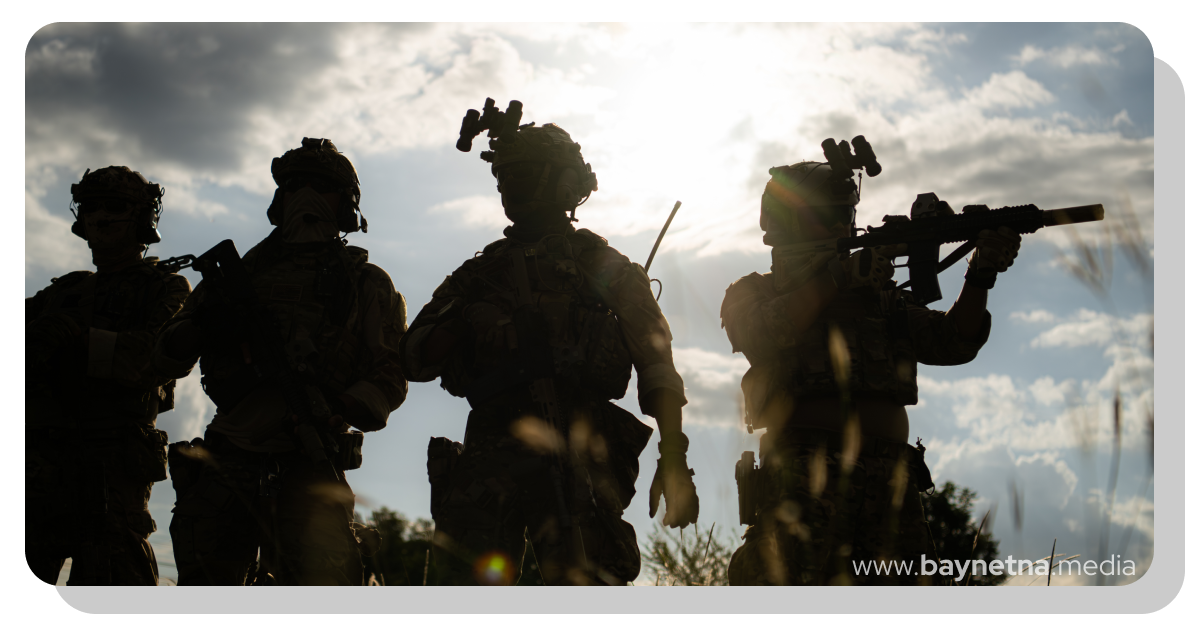
On the ground, Phase 1 resulted in a visible strengthening of the Lebanese army’s presence south of the Litani. The armed forces increased patrols and checkpoints to assert their central role in the region’s security and limit the room for maneuver of non-state armed groups. The goal was to ensure a continuous State presence and stabilize an area long marked by fragmented security balances.
According to official statements, the army identified and neutralized more than 170 tunnels, closed 11 unofficial crossing points, and seized more than 500 rocket launchers since the launch of the phase. Weapons caches and military positions were also dismantled in several localities, reducing the operational capacity of armed groups outside the institutional framework. These operations were carried out in a logic of security and prevention, sometimes in coordination with UNIFIL, to limit risks for local populations and ensure effective state control.
At the same time, the army sought to strengthen the diplomatic visibility of its actions. Field visits for international diplomats and observers allowed for concrete demonstration of the progress made and highlighted the central role of the armed forces in stabilizing the South. This communication serves both to strengthen the Lebanese State’s credibility with the international community and to reassure the region’s residents about the progressive return of institutional security control.
Structural Limits of Phase 1
Despite the announcement of Phase 1’s completion, several structural limits are clearly apparent. First, the scope of action remained strictly concentrated south of the Litani, leaving out other regions where the issue of weapons outside State control remains. This geographically limited approach reflects the authorities’ desire to move forward gradually, but it also fuels doubts about the plan’s actual scope on a national scale.
Furthermore, the data provided by the army, while numerical, remains partial. No detailed public inventory has been made accessible regarding the exact nature of the seized weapons or the extent of the dismantled infrastructure. This lack of complete transparency complicates the independent evaluation of results and feeds divergent interpretations, both internally and internationally.
Finally, Phase 1 is part of a still very unstable regional and security context. The persistence of ceasefire violations and external pressures limit the Lebanese State’s room for maneuver. In this framework, authorities must deal with sensitive internal balances, where any security progress remains closely linked to broader political considerations. These constraints serve as a reminder that Phase 1, although important, is only a preliminary step in a long and uncertain process.
Disarmament of Lebanon: A Deeply Divided Reading
While Lebanese authorities present Phase 1 as a measured but necessary advance, its interpretation varies strongly among political and diplomatic actors, revealing the tension lines surrounding the issue of disarmament and the State’s role in managing the country’s security.
Lebanese Authorities: Supporting the Army, Preserving Balances
On the side of Lebanese institutions, the completion of Phase 1 was welcomed as a positive step, primarily due to the central role played by the army. The President of the Republic, Joseph Aoun, and the Speaker of the House, Nabih Berri, showed clear support for the armed forces, insisting on the need to strengthen their capacity to assume the monopoly on weapons while avoiding any internal escalation.
The official discourse emphasizes a gradual approach, based on stability and the preservation of national cohesion. Authorities stress that disarmament can only be considered within a controlled institutional framework, taking into account the country’s political, social, and security realities. This caution translates into a refusal of a brutal or unilateral approach in favor of a progressive process led by the State.
In this context, the government also insists on the importance of international support, particularly regarding funding and equipping the army. The evaluation mechanisms put in place aim to demonstrate the credibility of the Lebanese commitment, while recalling that consolidating the state monopoly on weapons remains a long-term project, closely linked to regional stability and the evolution of the global security context.
Non-State Armed Actors: Between Caution and Reservations
On the part of non-state armed actors, the end of Phase 1 was met with a certain reserve. Public positions emphasize the need to place any discussion on weapons within a broader political and regional framework, going beyond the Lebanese context alone. This reading insists on the link between the internal security situation and regional dynamics, notably the conflict with Israel and the deterrence balances resulting from it.
Hezbollah, a central actor in this security environment, expressed disappointment with certain official statements while calling for restraint and a “reasonable” approach to the issue. Its discourse highlights that the question of weapons cannot be dissociated from external threats and the role it claims in defending the country. This position reflects a desire not to appear in direct confrontation with the State while maintaining its red lines on the substance of the process.
These reservations illustrate the limits of disarmament envisioned exclusively from a technical or security perspective. For these actors, any lasting evolution remains conditional on a broader political framework, including security guarantees and regional stabilization. This divergence in approach highlights the complexity of the file and the difficulty for the Lebanese State to move forward on this terrain without reviving deeply rooted internal tensions.
Israel and Its Allies: A Security Reading Judged Insufficient
From the Israeli side, the announcement of Phase 1’s completion was met with marked skepticism. Israeli authorities believe that the measures implemented by the Lebanese State remain insufficient to address security concerns along the border. This reading is based on the idea that partial and geographically limited disarmament does not, in their view, eliminate the risks associated with the presence of non-state armed groups near the Blue Line.
Several Israeli officials minimized the impact of the Lebanese announcements, claiming that the military capabilities of these groups had not been significantly affected. This discourse is part of a strategy of continuous pressure on Beirut, aiming to demand more extensive and faster measures. It also contributes to maintaining a high level of military vigilance, despite the officially enforced ceasefire.
This position reinforces tensions around the disarmament process. By judging Lebanese efforts as “far from enough,” Israel conditions any lasting de-escalation on results it considers more concrete. For Lebanon, this reading poses a major challenge: moving forward in a delicate internal process while facing external security demands that limit its room for maneuver and weaken the already precarious balance of the ceasefire.
Contrasted International Reactions
International reactions to the completion of Phase 1 were generally measured, mixing political encouragement and strategic caution. Several partners of Lebanon, including France, welcomed the efforts made by the Lebanese State and the army’s central role in implementing the plan. These positions emphasize the importance of a lasting reinforcement of Lebanese security institutions as an essential condition for the country’s stability.
At the same time, this support remains largely conditional. International actors, notably in the United States, insist on the need for more extensive and verifiable results, placing the disarmament of non-state armed groups within a broader regional reading. Statements from American officials serve as a reminder that expectations are not limited to South Lebanon but concern the entire Middle Eastern security landscape.
This ambivalent approach reflects the constraints Lebanon faces: benefiting from indispensable diplomatic and financial support while remaining subject to high demands on a politically sensitive issue. For international partners, Phase 1 constitutes an encouraging but still insufficient signal. For Lebanon, it primarily marks the beginning of a long process, the credibility of which will depend as much on its continuity as on its ability to preserve internal stability.
Towards Security Stability in Lebanon?
The completion of Phase 1 of the disarmament plan is primarily an institutional step. It reflects the Lebanese State’s stated desire, through its army, to strengthen its authority and move towards a monopoly on legitimate force in the south of the country. This dynamic allows Lebanon to respond, at least partially, to the expectations of its international partners while seeking to preserve a fragile internal balance.
The contrasted reactions to this announcement, however, illustrate the process’s limits. Between non-state armed actors who condition any evolution on a broader political and regional framework, external critics judging the measures insufficient, and cautious international supports, the next steps of the plan remains uncertain. For us Lebanese, the stake goes beyond the sole question of disarmament: it is about whether the State can, progressively and without rupture, rebuild a credible security authority—an indispensable condition for lasting stability and any prospect of reconstruction.
Sources:
- https://www.aljazeera.com/news/2026/1/8/lebanons-army-says-phase-one-of-hezbollah-disarmament-in-south-completed?traffic_source=rss
- https://www.nytimes.com/2026/01/08/world/middleeast/hezbollah-disarmament-lebanon-israel.html%23
- https://www.lorientlejour.com/article/1491195/le-hezbollah-appele-a-la-raison-sur-le-desarmement-se-dit-decu-des-declarations-de-aoun.html
- https://www.naharnet.com/stories/en/317597-france-welcomes-lebanon-progress-in-disarming-hezbollah
- https://www.naharnet.com/stories/en/317616-trump-comments-on-disarmament-of-hamas-and-hezbollah