
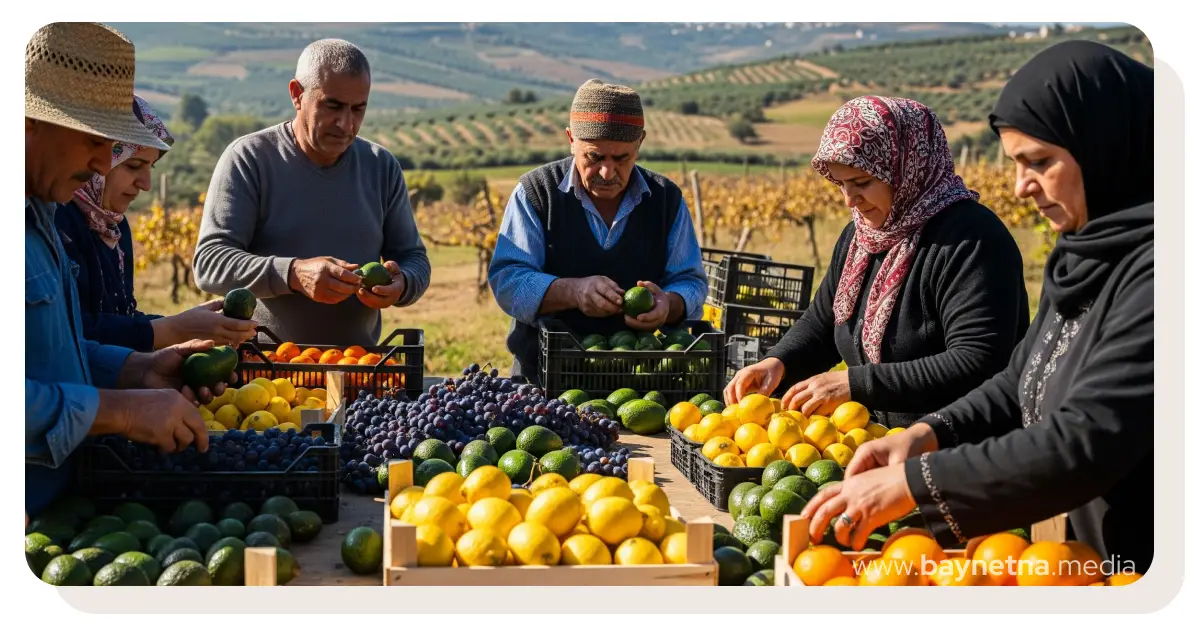
The soul of the Lebanese land seems indomitable, with nothing managing to break it. Despite the economic storms and crises shaking our region, Lebanese farmers continue to cultivate excellence with admirable flair. Today, we finally see the fruits of this hard work crossing borders. Agricultural exports are becoming the main engine of our national resilience. It is a source of pride for us to see our flavors recognized on tables worldwide. Every crate that leaves our ports tells a story of courage and perseverance.
A Burst of Vitality for the Lebanese Economy
The beginning of 2025 marks a historic turning point for Lebanese exports. The figures speak for themselves and restore hope to a youth seeking perspectives. During the first quarter, we recorded a staggering growth of +30%. This increase is mainly driven by the dynamism of plant production. Our processed agri-food products also contribute to this strong economic performance. This dynamic demonstrates the capacity of Lebanese genius to adapt even to the most complex situations.
Export Ambition: An Illustration Through Quantified Data
The objectives set for the current year are ambitious but realistic. The export sector aims for a total revenue of seven hundred and fifty million dollars. This amount represents much more than a simple accounting figure for us. It is the symbol of a sector that is becoming more professional day by day. Our companies are now adopting the strictest international standards. Lebanese quality is establishing itself as an essential reference in foreign markets. It testifies to our desire to shine once again on the world stage.
Reclaiming Historical and Global Markets
Our trade relations with Gulf countries are finally finding a welcome stability. This is excellent news for our country’s producers. Saudi Arabia has reopened its doors to Lebanese citrus fruits. The Emirates maintain a very strong demand for our avocados. This resumption of trade secures thousands of jobs in Lebanon. It also allows for a sustainable rebalancing of our trade balance. We must cultivate these precious partnerships with the greatest care.
Mapping Lebanese Exports
Lebanon exports a wide variety of products, bolstered by improved certification standards (GlobalGAP).
Here are the main Lebanese export flows:
1. Fruit and Vegetable Exports
- Avocados: United Arab Emirates, Kuwait, Qatar, and increasingly towards the European Union (Germany, Netherlands).
- Citrus fruits (lemons, oranges): Saudi Arabia (resumption of flows), Iraq, Jordan.
- Table Grapes: United Kingdom, United Arab Emirates, Gulf countries.
- Apples: Egypt (major historical market), Iraq, Libya, and certain African countries.
- Bananas: Syria and Jordan.
- Cherries and Stone Fruits: Qatar, United Arab Emirates.
- Potatoes: European Union (via seasonality agreements), United Kingdom, Gulf countries.
- Fresh Vegetables (tomatoes, cucumbers, peppers): mainly to regional markets (Iraq, Gulf countries).
2. Processed and Agri-food Exports
- Olive Oil: United States, Canada, Australia, France, Saudi Arabia.
- “Mouneh” Products (jams, pomegranate molasses, dried herbs/Zaatar): Lebanese diaspora in Europe (France, Germany) and North America.
- Lebanese Wines: United Kingdom, France, United States.
- Arak and Spirits: everywhere where the diaspora is present.
Avocado Exports: Lebanon’s Green Gold
The avocado has become the true star of our agricultural product exports. Thanks to certifications like GlobalGAP, we are now exporting to the European Union. German and Dutch consumers particularly appreciate the texture of our fruits. Lebanon’s unique climate gives our avocados a flavor found nowhere else. This is a comparative advantage that we must absolutely preserve. Our coastal hills are gradually transforming into productive and profitable orchards. Every tree planted is a promise of a future for our rural areas.
The Success of Table Grape Exports
The United Kingdom and Gulf countries are fond of our table grapes. Our exporters have invested in modern storage and cold chain infrastructure. This ensures impeccable freshness until the final destination. The responsiveness of Lebanese operators to global health requirements is exemplary. Every bunch sent abroad carries the brand image of our expertise. It is a demonstration of technological strength at the service of our land. We prove that tradition can be allied with modernity.
Excellence of the Lebanese Terroir and Transformation
Lebanon is not limited to exporting raw materials; we also excel in adding value to our natural resources through processing. The agri-food sector is a major pillar of our cultural and economic identity. For example, Lebanese olive oil is now present in kitchens across the United States and Canada. It is the fruit of an ancestral tradition combined with modern pressing techniques. Every bottle of olive oil contains all the sunshine and passion of our olive growers.
Lebanese Wine Exports
Our wines are undoubtedly our best ambassadors internationally. The Lebanese wine sector has become an example of absolute success. From the United Kingdom to France, connoisseurs praise the complexity of our grape varieties. The estates of the Bekaa and the South bear witness to the richness of our soil. Exporting our wine means exporting a piece of Lebanese history. It is an industry that never stops innovating to stay at the top. Each vintage is an invitation to discover the nobility of our heritage.
The Diaspora: A Pillar of Lebanese Product Consumption
We cannot talk about Lebanese exports without mentioning our diaspora. Lebanese people all over the world are the primary customers of our traditional “Mouneh.” Whether it’s for Zaatar, pomegranate molasses, or jams, demand is constant. Our brothers and sisters living in Europe or America maintain a vital link with their homeland. They are the essential relays of our commercial influence. Their support helps sustain many small local producers. This blood bond transforms into a powerful economic engine.
The Challenges of an Agriculture in Transition
However, we must remain clear-eyed about the persistent difficulties. The agricultural sector has suffered considerable damage due to regional tensions and fires. The FAO estimates losses and damages at approximately seven hundred and four million dollars. This destruction mainly affects infrastructure and cultivable land in the South. This is a major obstacle that we must overcome with solidarity and determination. Our farmers show heroic courage in protecting their harvests under fire.
Addressing Food Insecurity
The contrast is sometimes striking between our export successes and the local reality. One-third of the population in Lebanon faces acute food insecurity. Approximately 1.65 million people struggle every day to feed themselves properly. The World Food Programme remains mobilized to support the most vulnerable among us. It injects twelve million dollars monthly in cash transfers to help families.
We cannot ignore this suffering hitting our own people. Commercial success must also serve national social cohesion.
A Vision for Lebanon’s Future
The recovery of our country will be a long-term process. We must imperatively reconcile export success with the needs of the domestic market. Modernizing distribution circuits is an absolute priority. Encouraging young people to invest in agriculture is also essential for our future.
Lebanon has the necessary resources both to ensure the food self-sufficiency of its population and to attract the attention of the global market. Thus, we firmly believe in our land’s ability to rise again. Together, we will build a fairer and stronger agricultural system.
Sources:
- Food and Agriculture Organization of the United Nations (FAO)
- Reports on agricultural damage in Lebanon – fao.org
- World Food Programme (WFP)
- Lebanon Food Security Situation Report (September 2025) – reliefweb.int
- Lebanese Customs
- Foreign trade statistics and trade balance – customs.gov.lb
- Ministry of Agriculture of Lebanon
- Directives and compliance for exports to the Gulf – agriculture.gov.lb
- Libnanews / L’Orient-Le Jour
- Economic analysis on trade deficit and export recovery – libnanews.com
- World Bank
- Lebanon Economic Monitor – 2025 Growth Forecasts – worldbank.org


